Dec 18, 2025
Articles
What School Got Wrong (And AI Made Obvious)
What AI revealed about school
Haley Moller
Co-founder & CEO
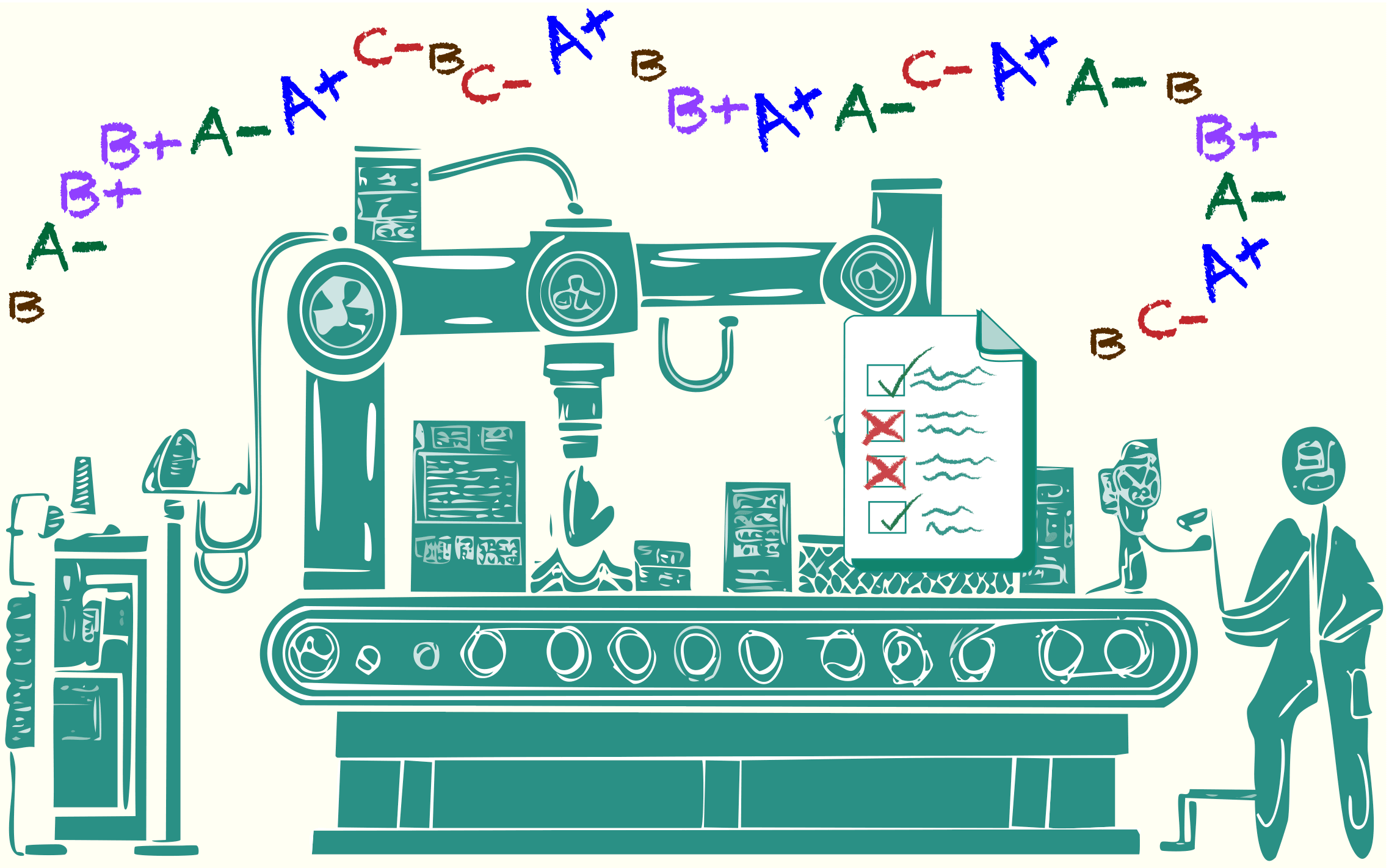
A great deal has changed since the days of Socrates. Mass schooling, a relatively recent invention, vastly expanded access to education, but it came with trade-offs. Chief among them was organizing classrooms around grades, an easily scalable measure. Over time, this emphasis displaced learning with metric optimization, turning grades from tools for guidance into instruments of judgment.
Anyone who has gone to school knows that earning a good grade often diverges from learning deeply. Ambitious students learn to play the game because they know they will be judged by the outcome. The advent of AI made this reality even more obvious, since polished work can now be generated on demand. When the take-home essay is the primary graded artifact in a humanities course, the assignment becomes easy to game—not because students are unusually immoral, but because the system rewards optimized output.
Socra's core bet is that AI can help solve this problem by changing what counts as work. When the emphasis shifts, gaming declines. Instead of grading only the final product, Socra captures students' reasoning in dialogue, enabling teachers to assess the quality of thinking—curiosity, use of evidence, and willingness to revise—rather than just polished prose. The aim is to revive oral exams in a scalable form, moving the student's task from producing a convincing essay to making interpretive reasoning visible. Along the way, students learn to use AI not as a substitute for thinking, but as a tool to challenge and refine their own thinking.
This shift aligns with a Socratic idea: The best assessments are the ones you cannot master by finding a trick, because what they test is thinking itself. Socrates called this state aporia—a productive puzzlement that arises when easy answers fall away and one is forced to examine assumptions, weigh alternatives, and revise his or her view. In the humanities, the real work is not fluent paragraph-writing but noticing, grounding claims in text, and testing interpretations against counter-readings long enough to become willing to change one's mind. Socra's conversational format makes these moves the unit of success. When students must point to lines, explain why they matter, and grapple with alternatives, polished prose can no longer substitute for genuine engagement.
This same philosophy also warns Socra of its own risks, however. If Socra becomes a new proxy ("score 5/5 on Evidence Use" or "generate three counterarguments"), students will optimize those numbers too. Any high-stakes metric becomes a target, and targets get gamed. The goal is not to eliminate measurement, but to keep it honest about what it represents and, most important, tethered to real intellectual work.
Put simply, Socra's philosophy is this: Make the best way to do well in school the same as the best way to learn. When a student's visible work is reasoning in motion, incentives shift. Students do not have to be told not to cheat; they are invited into an activity where thinking is the point, and the record of thinking is what matters.